






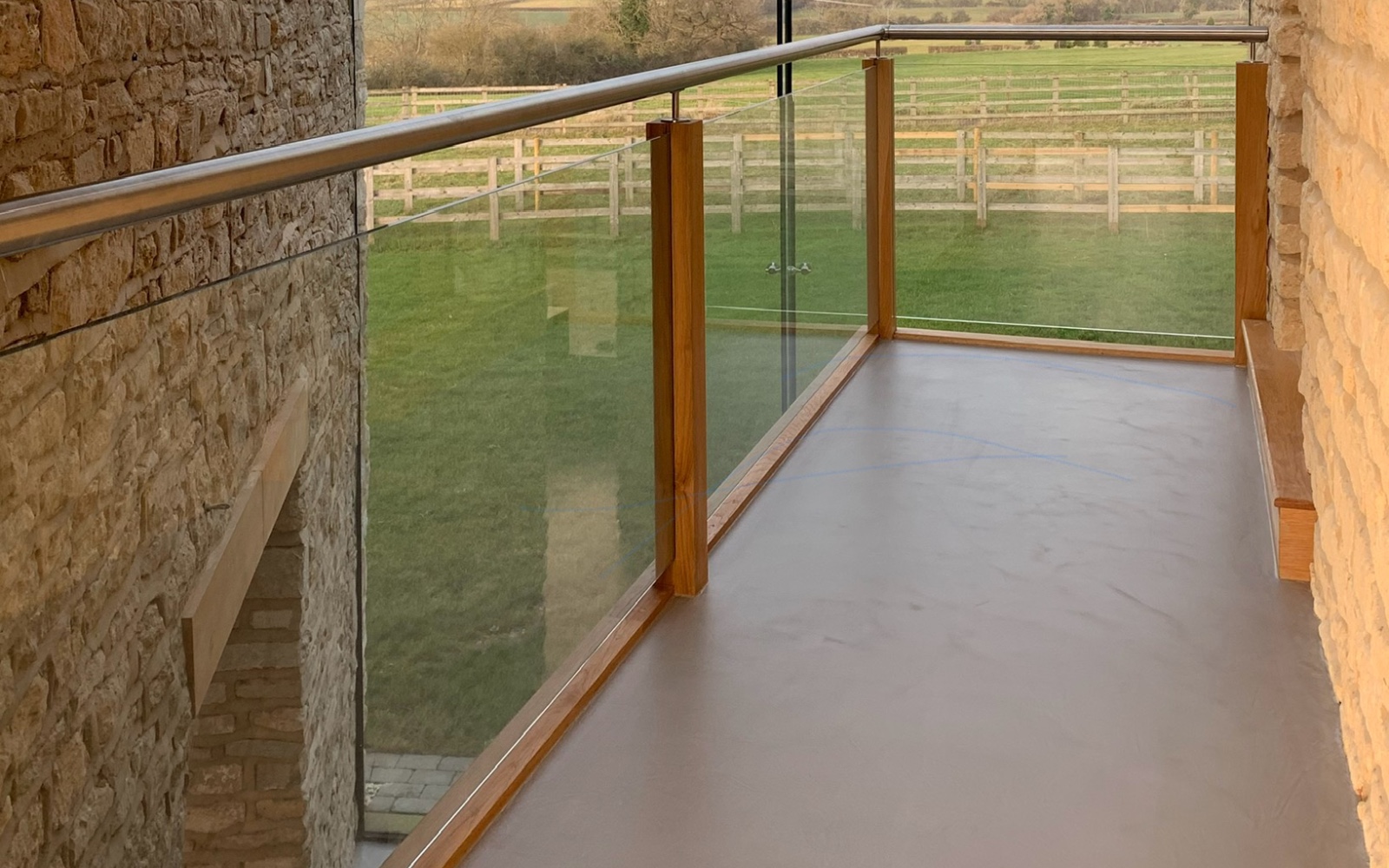


If you’ve never heard of microcement before, you’re not alone. It’s still a relatively new finish in the UK, but across Europe it’s been used for decades in high-end homes, hotels and commercial spaces. Over the last few years, I’ve watched it gain real traction, particularly with architects, developers and interior designers looking for a modern, seamless finish that delivers both durability and visual impact.
In simple terms, microcement is a cement-based decorative coating applied in very thin layers over existing surfaces. It can be installed directly onto concrete, screed, plywood, plasterboard and even tiles, which means in many cases there’s no need to remove what’s already there. Instead of demolition, waste removal and rebuilding subfloors, the finish can be applied straight over the top.
One of the biggest advantages of microcement is its ability to transform a space without the disruption of conventional renovation. In a typical refurbishment, replacing tiled flooring involves removal, disposal, preparation and reinstatement — a process that quickly becomes time-consuming and costly. Microcement simplifies this by working with the existing surface, reducing both downtime and labour.
A great solo travel tip spotted this week on Hotel Designs.


