







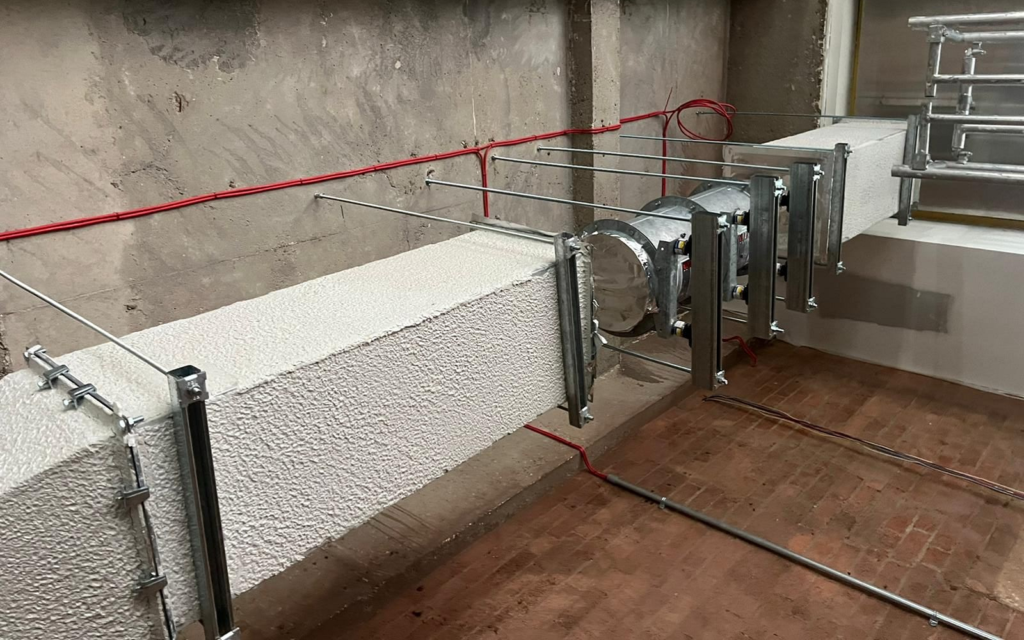


As space becomes more limited, basements are being used more often for car parks, plant areas, and even occupied spaces. This makes effective smoke control essential—not just for meeting regulations, but for protecting people, property, and supporting firefighting in an emergency.
There are a number of guidelines that shape how these systems are designed. These include standards such as BS 7346-7 and BS 9999, as well as Approved Document B, which many clients will already be familiar with. Alongside these, there are European standards covering the performance and testing of smoke control systems and components. Together, these set out how systems should perform, but applying them in practice often requires careful coordination between the building layout, structure, and services. What can seem straightforward at first can quickly become more complex once factors like escape routes, compartmentation, and fire service access are considered.
Dampers are another important element and are sometimes misunderstood. Fire dampers are designed to close when heat is detected, helping to stop fire spreading between different parts of the building. Smoke control dampers, on the other hand, are active components that open and close as part of the smoke extract system during a fire. Both need to be carefully selected, positioned, and coordinated with the wider design. It’s also crucial that they are installed exactly as they were tested and certified, as even small changes can affect how they perform.
A great solo travel tip spotted this week on Hotel Designs.


