






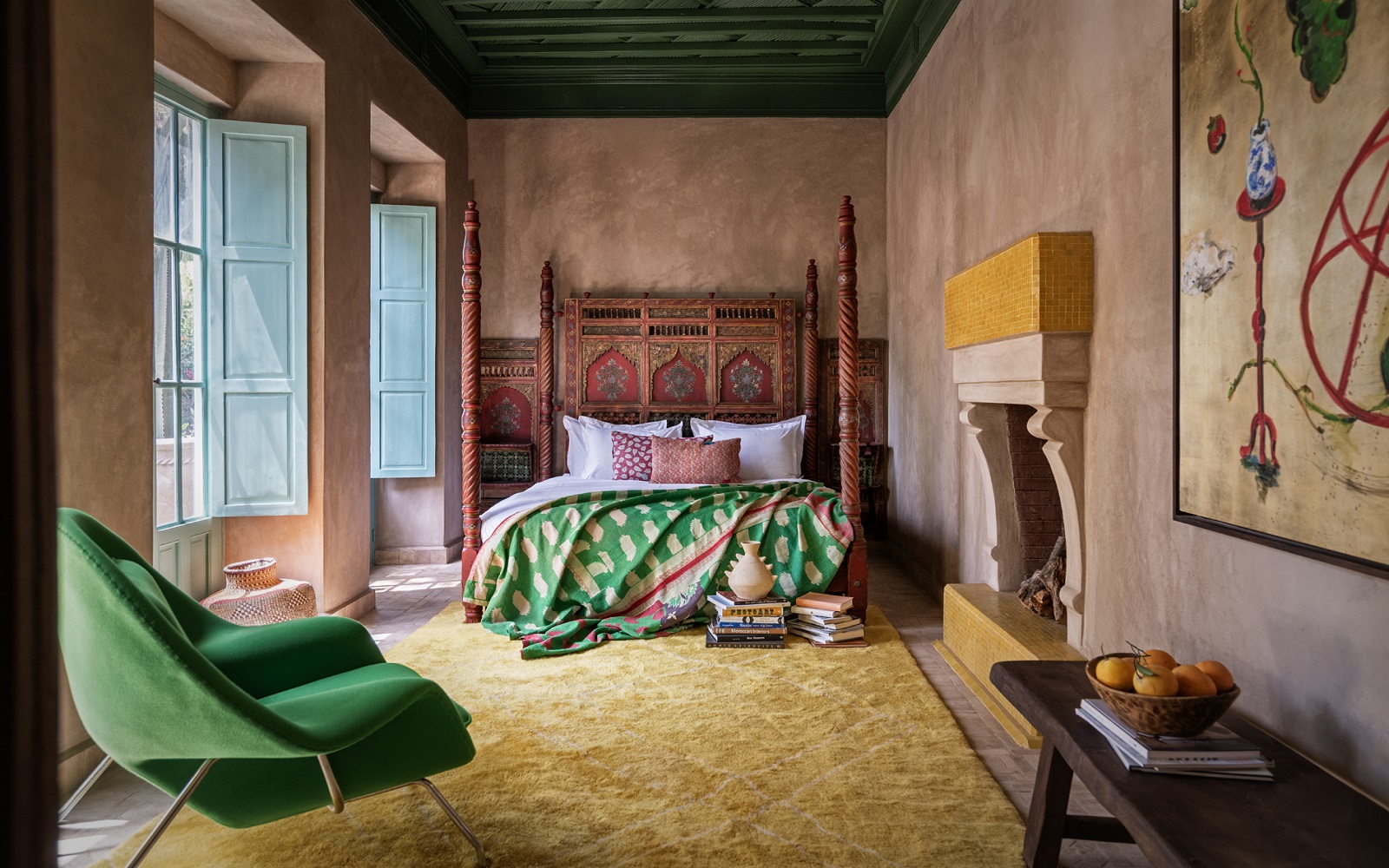


Like so many Moroccan properties, Jnane Rumi is hidden from view by clay walls and cascading bougainvillea, with no hint of the artistic canvas on the other side – well, possibly that traffic-light-red cactus sculpture next to the gate should have been a hint, as we wrestled with maps and phones to make sure we were pressing the right bell! Once inside, walking past textured olive trees and towering palm trees, there is an immediate sense of being welcomed into a space that is both private and welcoming.
Catching up in conversation with the General Manager, we spoke about the openness of the space, both in terms of design and in philosophy. While the 13 guestrooms are clearly meticulously run as a small luxury hotel, there is also a sense of being welcomed into a home. This brings with it a looseness of time, a de-regulation, that is perhaps the ultimate luxury. This philosophy spills, most tangibly, over into the design of the public areas where there are no barriers between the working office space, the lounge, the kitchen – Jnane Rumi is an open space on all fronts.
A great solo travel tip spotted this week on Hotel Designs.

