







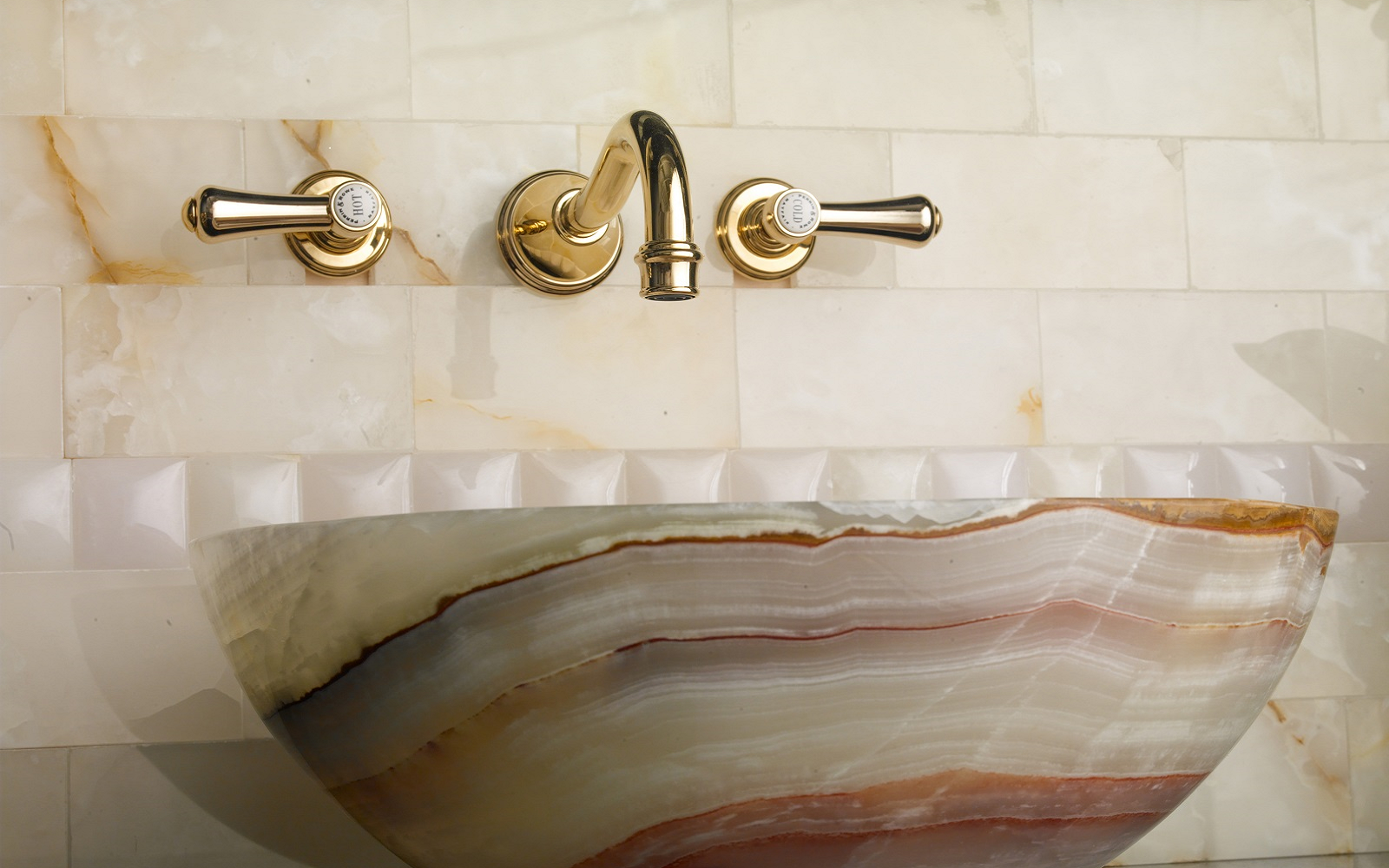


An Egyptian queen would recognise the taps in a Cornish hotel bathroom. Brass has been circulating for five thousand years – jewellery boxes, Edwardian hotel bars and the bath fittings at Fowey Hall. Since it was founded in 1978, Perrin and Rowe (part of the House of Rohl portfolio), has been making a strong case for its brassware using traditional sand casting.
Its pedigree runs deeper than most design vocabulary allows for. Ancient Egyptian artisans were working copper-based alloys into collars, amulets and ceremonial pieces for royalty long before ‘luxury’ was a marketing term, as Marie Soliman of Bergman Design House pointed out – brass represented craftsmanship and permanence before it represented style. “Warm in tone and rich in symbolism, brass complemented gold and precious stones, adorning collars, bracelets, amulets and intricate ornaments worn by royalty and nobility,” she added.
What keeps brass relevant is behaviour. “Brass is authentic,” said Christine Skaar of KVIST. “Solid brass develops a natural patina rather than simply wearing out, so it ages with the building instead of against it. It has also evolved without changing its identity—different finishes and surface textures satisfy changing tastes while the material itself remains timeless.” Soliman goes further: she loves the material precisely for the way it patinates and shifts colour over the years. “It carries history yet always finds its place within contemporary design because it brings warmth, depth and humanity to a space,” she explained.
A great solo travel tip spotted this week on Hotel Designs.


